Building the Infrastructure Behind the Digital Future

Category Archives: Data Center Infrastructure

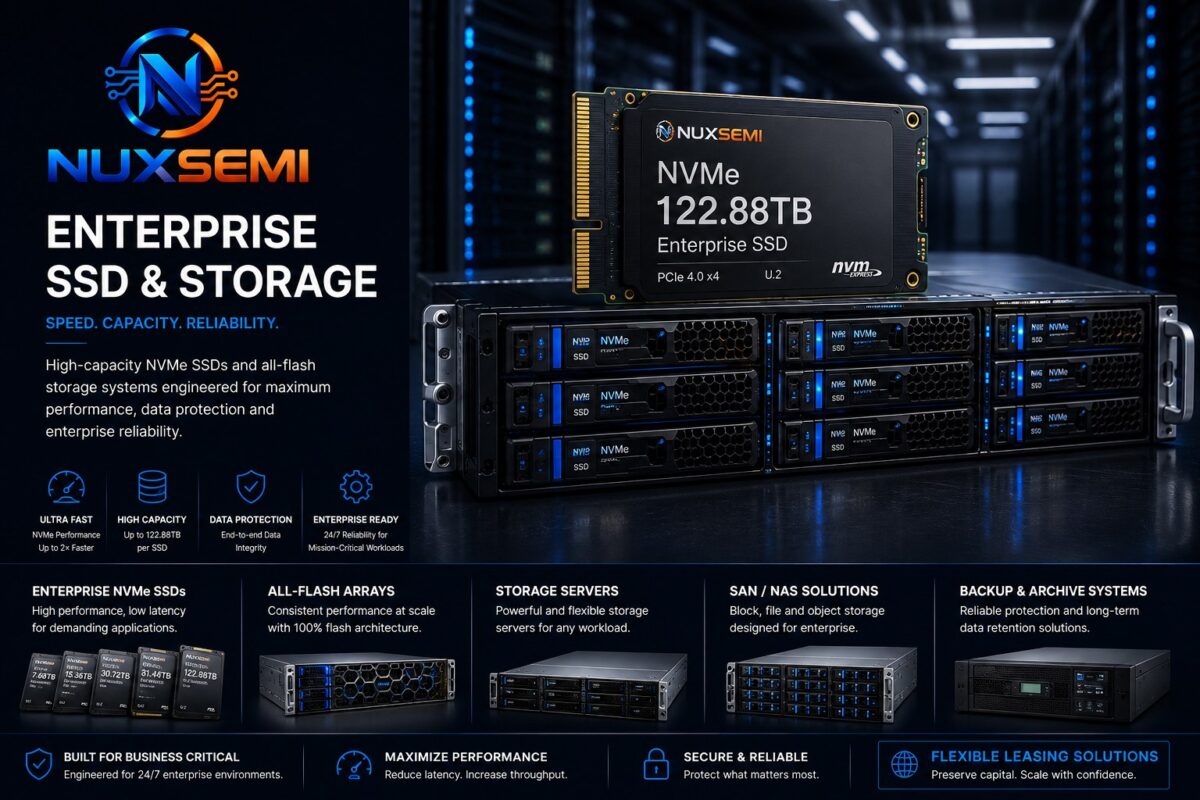
Enterprise NVMe SSD and all-flash storage infrastructure for modern data centers

High-Capacity Enterprise NVMe SSD Storage for AI, HPC & Data Centers

Modern data centers are increasingly required to store and move very large datasets while minimizing rack space, latency and operational complexity. Enterprise NVMe SSD technology has become an important component of high-performance storage architectures used for AI, HPC, cloud infrastructure, analytics and mission-critical enterprise workloads.
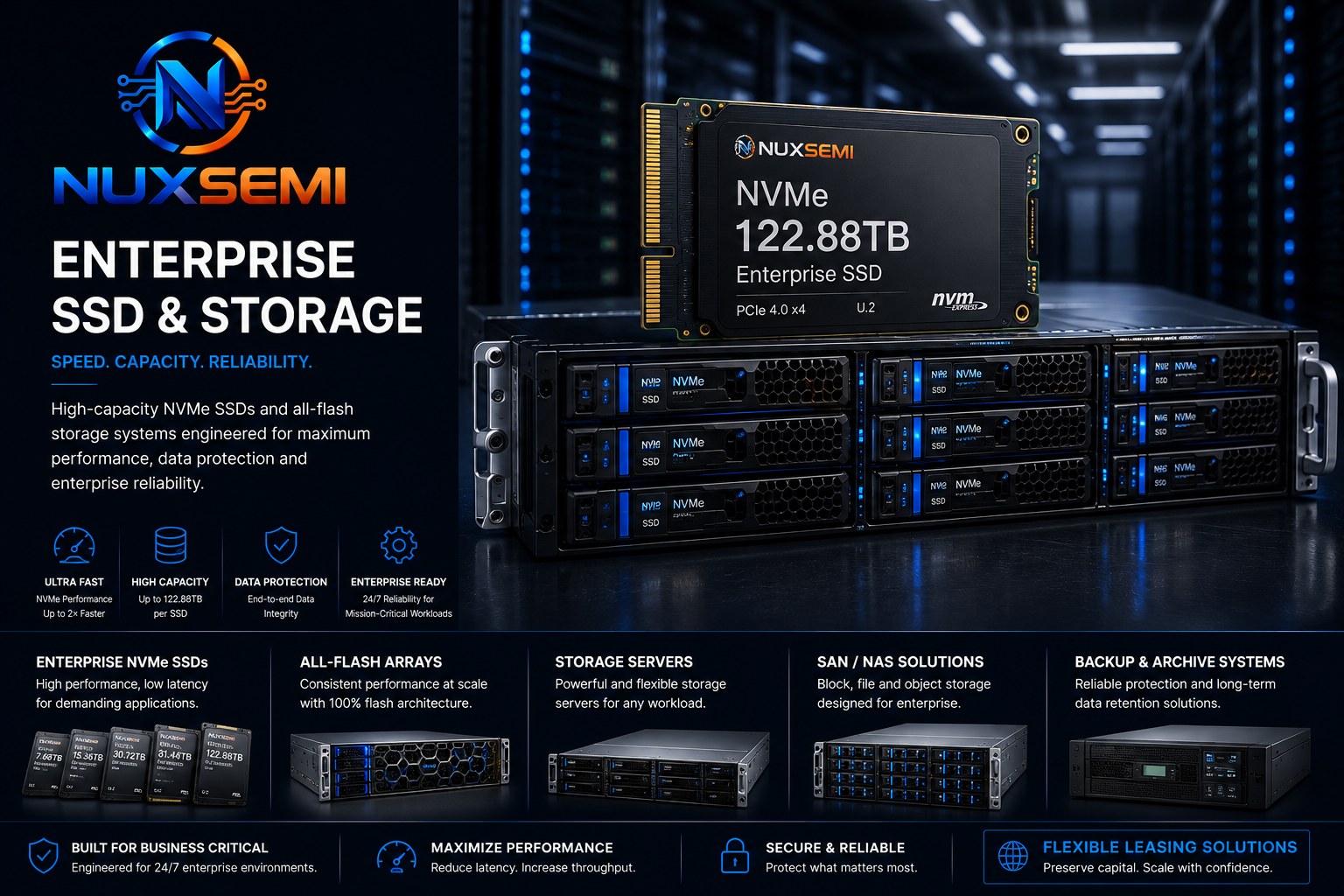
Enterprise NVMe SSD and all-flash storage infrastructure for modern data centers

Why High-Capacity Enterprise SSDs Matter

Higher-capacity SSDs can increase storage density while reducing the number of drives required for a given usable capacity. Capacity classes such as 61.44 TB and 122.88 TB are particularly relevant where operators need to consolidate substantial datasets into limited rack space.

The correct architecture nevertheless depends on workload profile, endurance requirements, performance targets, redundancy and total system design.

NVMe and Data-Center Performance

NVMe storage uses PCIe connectivity to reduce many of the architectural limitations associated with older storage interfaces. This can support high throughput and low latency for applications that need rapid access to large volumes of data.

NUXSEMI provides Enterprise SSD & NVMe Storage Solutions for individual drives as well as broader enterprise storage requirements.
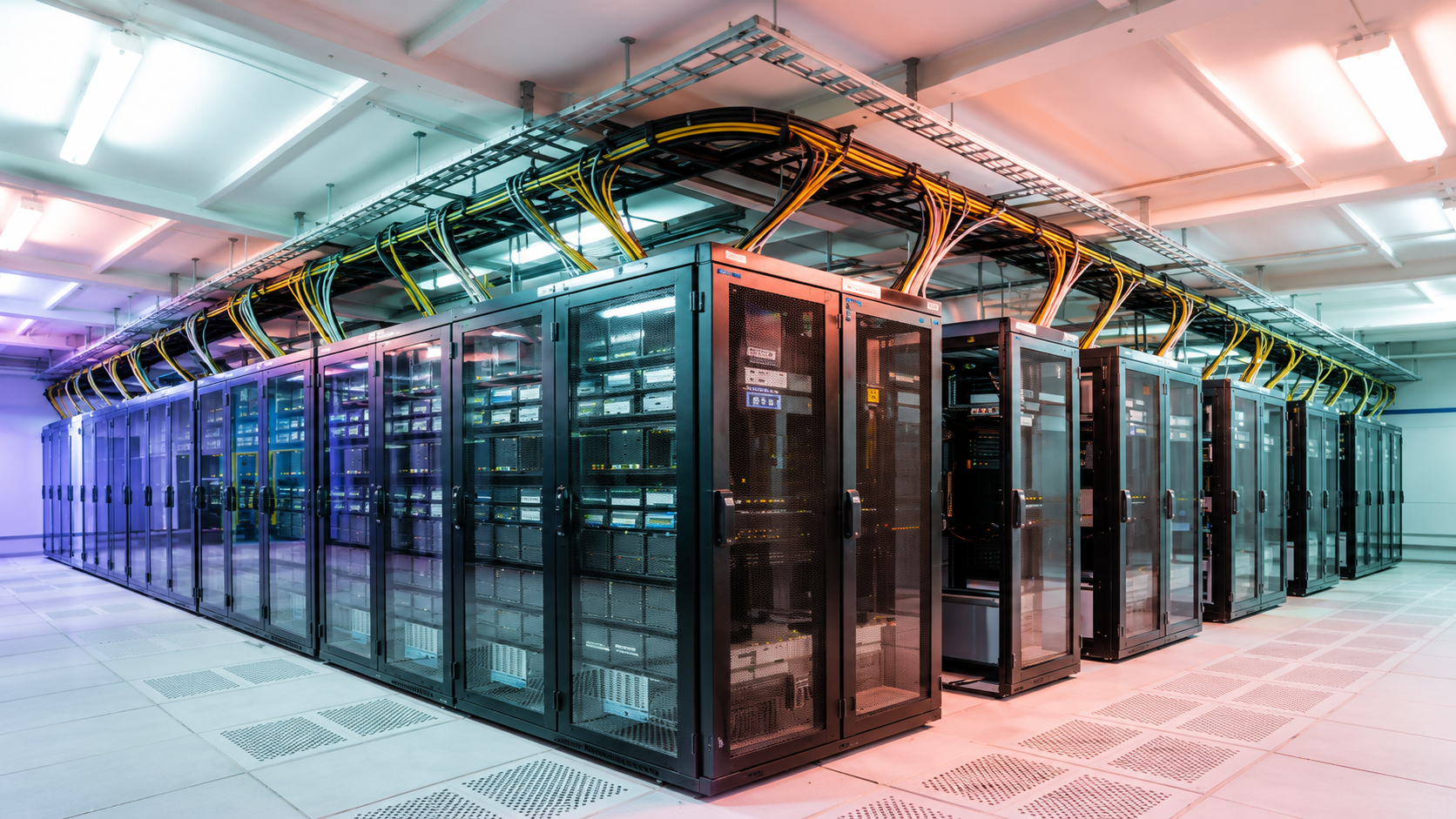
Modern enterprise data center with high-density server racks and structured cabling

AI and HPC Storage Requirements

AI training systems and HPC clusters can generate substantial sustained storage traffic. GPU infrastructure cannot operate efficiently if datasets cannot be supplied at the required rate.

For this reason, storage should be designed together with GPU infrastructure, high-speed networking and host-memory architecture.

Capacity Is Only One Metric

Enterprise buyers should also evaluate endurance, interface generation, form factor, power consumption, thermal characteristics, firmware capabilities, compatibility and workload-specific performance.

Specification documents and quotations should identify the actual manufacturer, model, capacity and technical characteristics offered for each transaction.

Storage Density and Infrastructure Design

Dense NVMe systems influence rack power, thermal management and network architecture. Large storage deployments should therefore be considered as part of the complete data-center environment.

Customers can review NUXSEMI’s wider Data Center & Enterprise IT Solutions for compute, networking, server, power and cooling infrastructure.

International Procurement

High-value enterprise storage may be supplied through structured procurement arrangements depending on quantity, destination, delivery terms, compliance requirements and financing structure.

Our Buy Solutions explain NUXSEMI’s international procurement framework, including applicable delivery terms and trade-finance structures.

For 61.44 TB, 122.88 TB or other enterprise NVMe storage requirements, contact NUXSEMI for availability, technical specifications and a formal quotation.
GPU

GPU Infrastructure for AI & HPC: Performance, Power and Cooling Considerations

GPU infrastructure has become central to artificial intelligence, machine learning, scientific computing and other highly parallel workloads. However, deploying accelerators successfully requires much more than selecting the GPU itself.

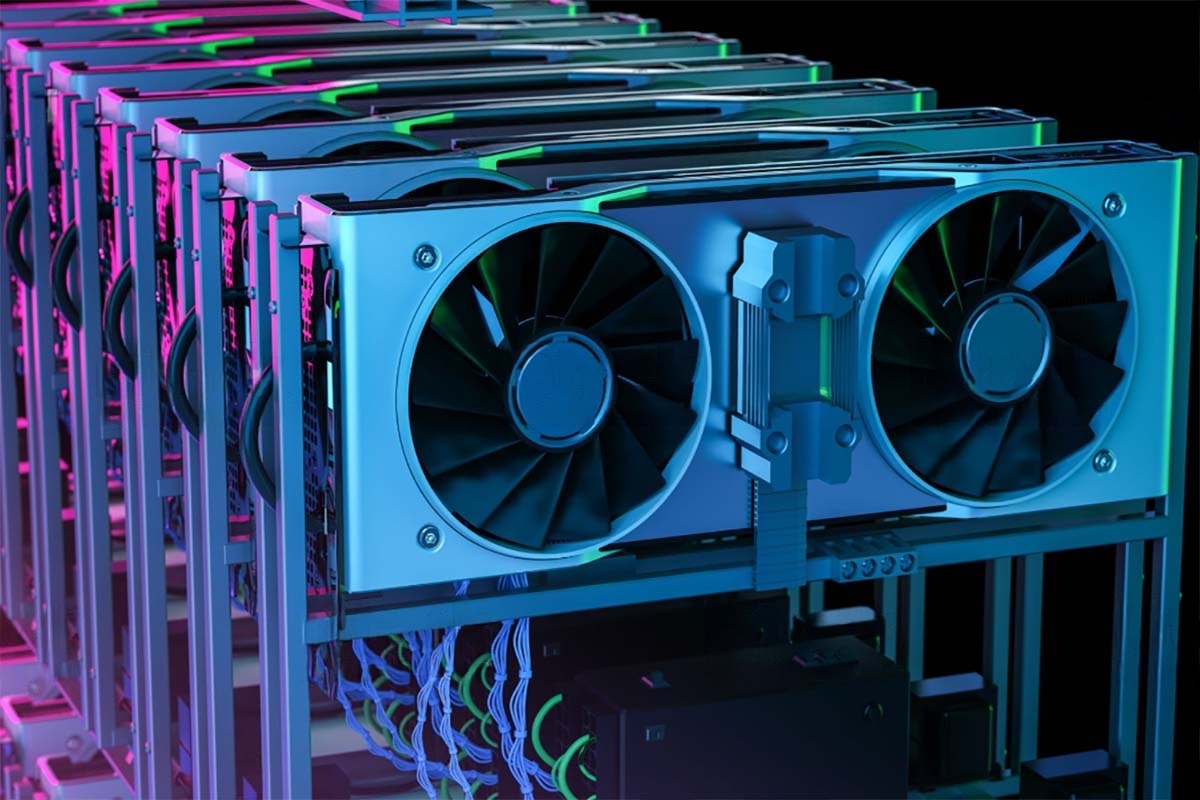
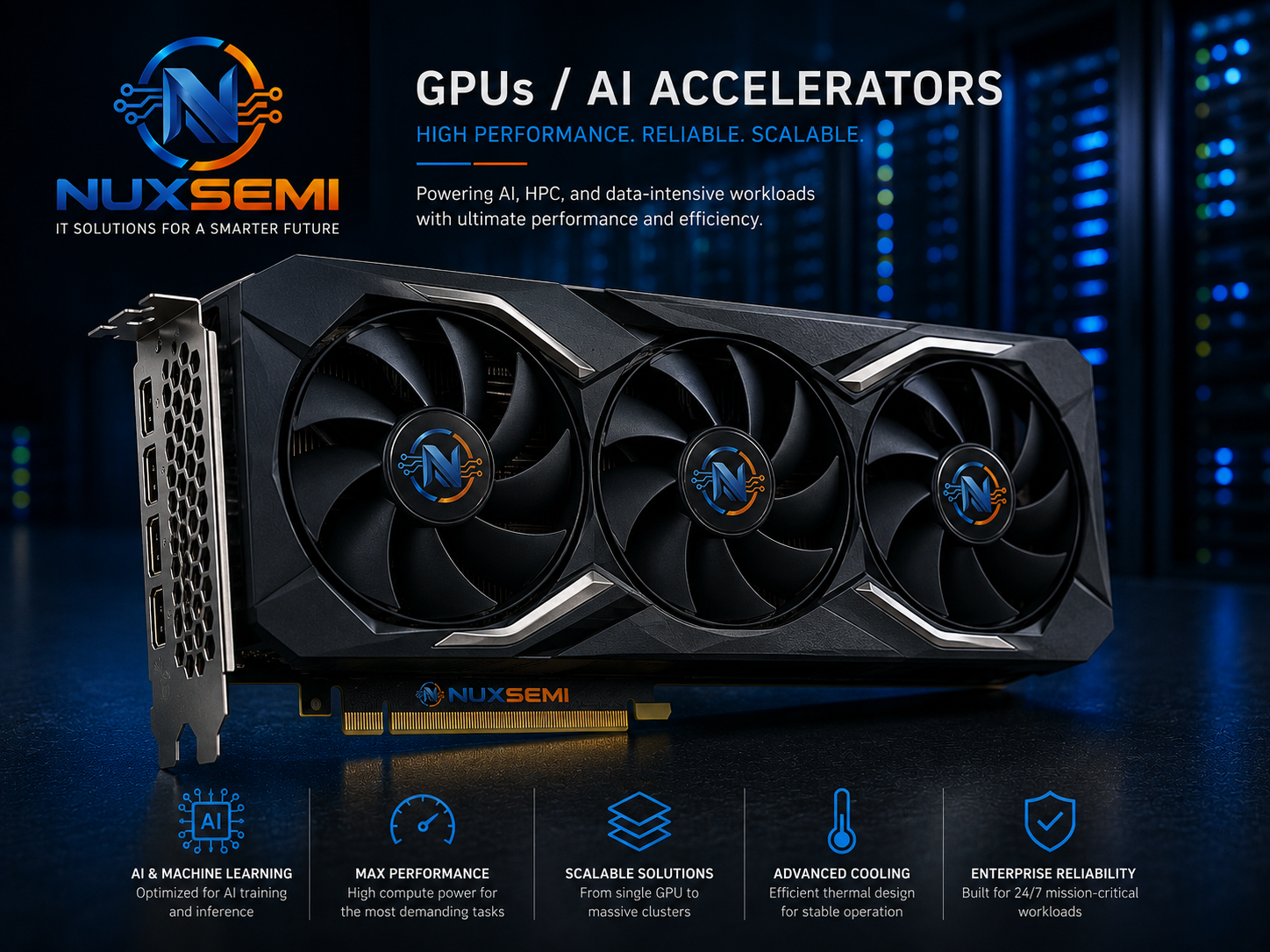
GPU and AI accelerator hardware for artificial intelligence and HPC workloads

GPU Compute Density

Modern accelerator servers can place substantial compute capacity inside a relatively small rack footprint. This creates advantages in performance density but also increases the importance of power delivery, thermal management, networking and storage architecture.

CPU-to-GPU Balance

GPU systems still rely on host processors for orchestration, data preparation and general-purpose workloads. CPU architecture, memory capacity and PCIe topology should therefore be selected to complement the accelerator configuration.

Our enterprise CPU selection guide for AI and HPC covers the processor side of this architecture.

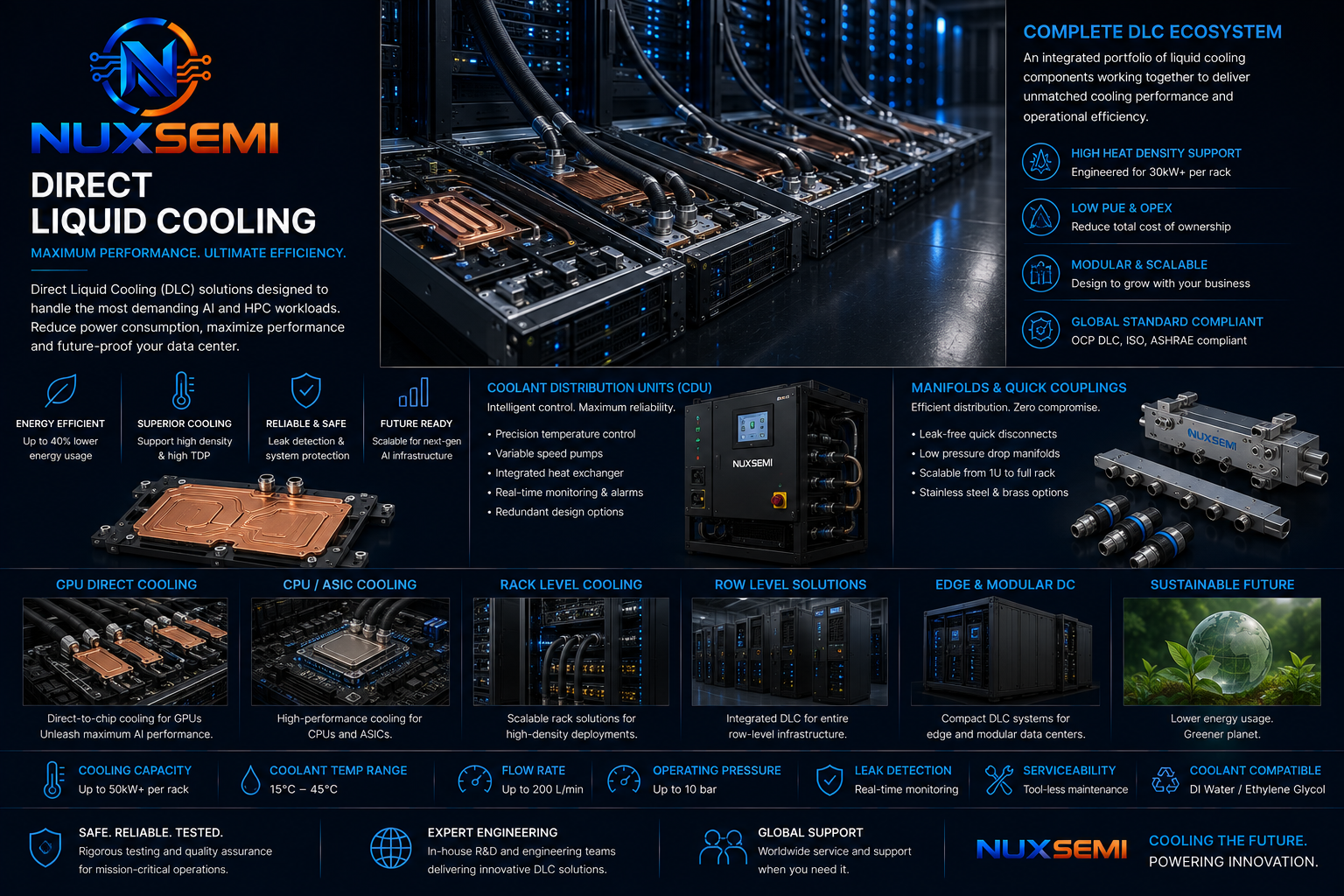
Direct liquid cooling infrastructure for AI GPU and HPC data center systems

High-Speed Networking

Multi-node AI training and HPC clusters depend heavily on low-latency, high-bandwidth interconnects. Network design may include high-speed Ethernet, InfiniBand-class infrastructure, optical transceivers and appropriately configured network adapters.

NUXSEMI provides Networking & Connectivity Solutions for enterprise, AI and HPC infrastructure.

Storage Throughput

Accelerators require data to be delivered efficiently. Storage design can become a bottleneck when large datasets must be continuously supplied to compute nodes.

High-capacity enterprise NVMe SSDs and scalable storage architectures can therefore play an important role in AI and HPC environments. See our Enterprise SSD & NVMe Storage Solutions.

Power and Thermal Density

GPU-rich racks can significantly increase facility power density. Cooling architecture must be evaluated at the rack and data-center level rather than treated as an afterthought.

For suitable high-density deployments, Direct Liquid Cooling can transfer heat more efficiently from processors and accelerators than relying exclusively on conventional air cooling.

Procurement and Deployment Models

NUXSEMI can support equipment acquisition through Buy Solutions or structured technology deployment through Lease Solutions, depending on the commercial requirements of the project.

For GPU servers, AI clusters, HPC infrastructure, networking or cooling requirements, contact NUXSEMI for a project-specific proposal.

RAM 5

DDR5 ECC Server Memory: Performance, Capacity & Data Center Deployment

DDR5 memory is an important element of current-generation server infrastructure. As virtualization density, database sizes, analytics workloads and AI-related processing continue to increase, memory configuration can materially influence overall platform performance and scalability.

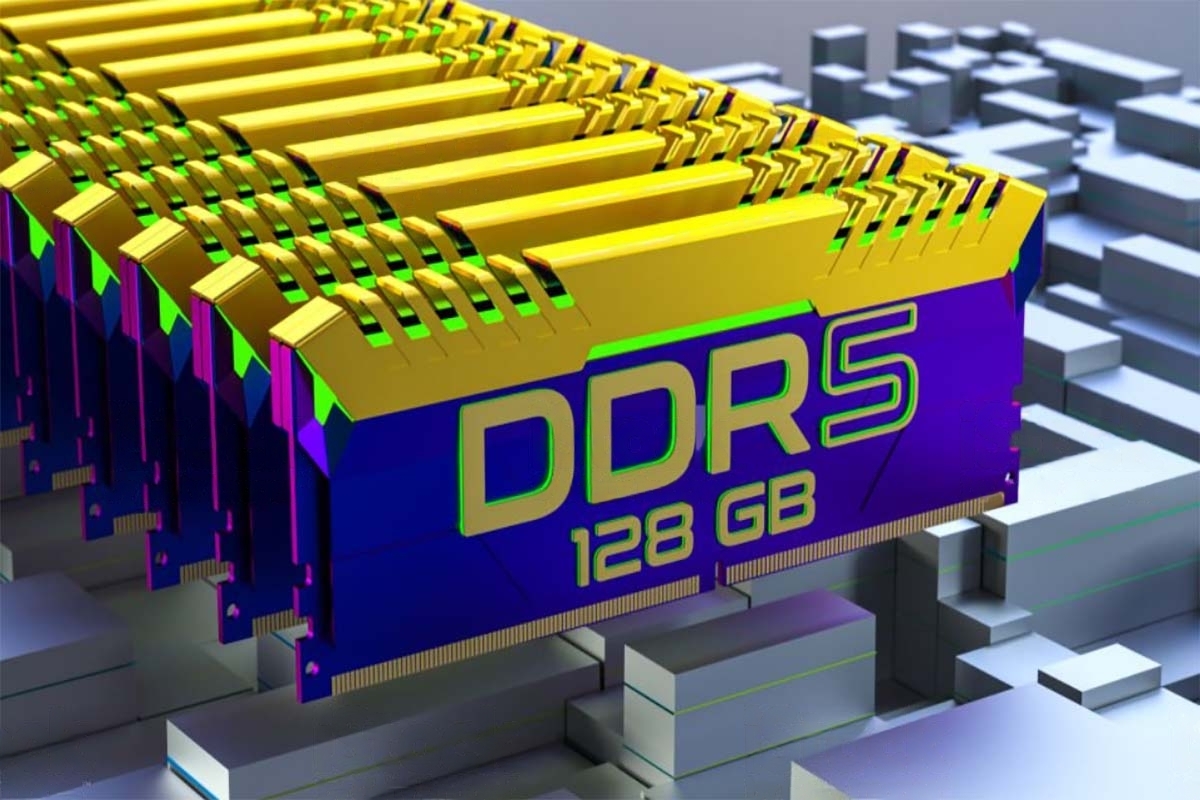
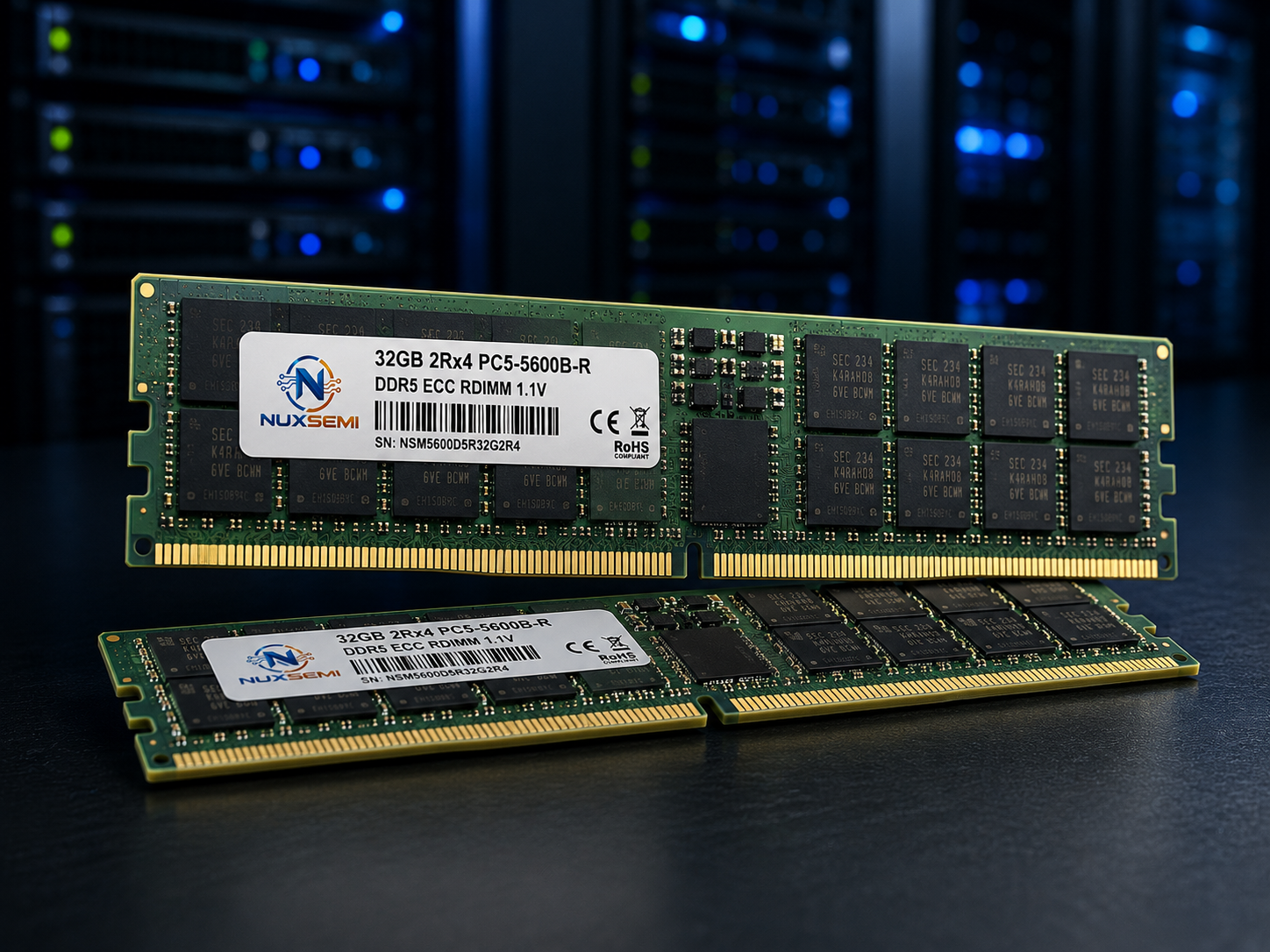
Enterprise ECC DDR5 server memory modules for data center infrastructure

DDR5 in Modern Server Platforms

Current enterprise platforms combine increasingly capable processors with multiple DDR5 memory channels. This enables significantly larger memory footprints and higher aggregate bandwidth than earlier generations, subject to the limits of the selected CPU and motherboard architecture.

Capacity Planning

Capacity should be determined according to the actual workload. Virtualization platforms may require substantial memory for virtual-machine density, while databases can benefit from larger memory allocations for caching and in-memory processing.

HPC and AI-supporting infrastructure may require a different balance between host memory, accelerator memory, storage throughput and network performance.

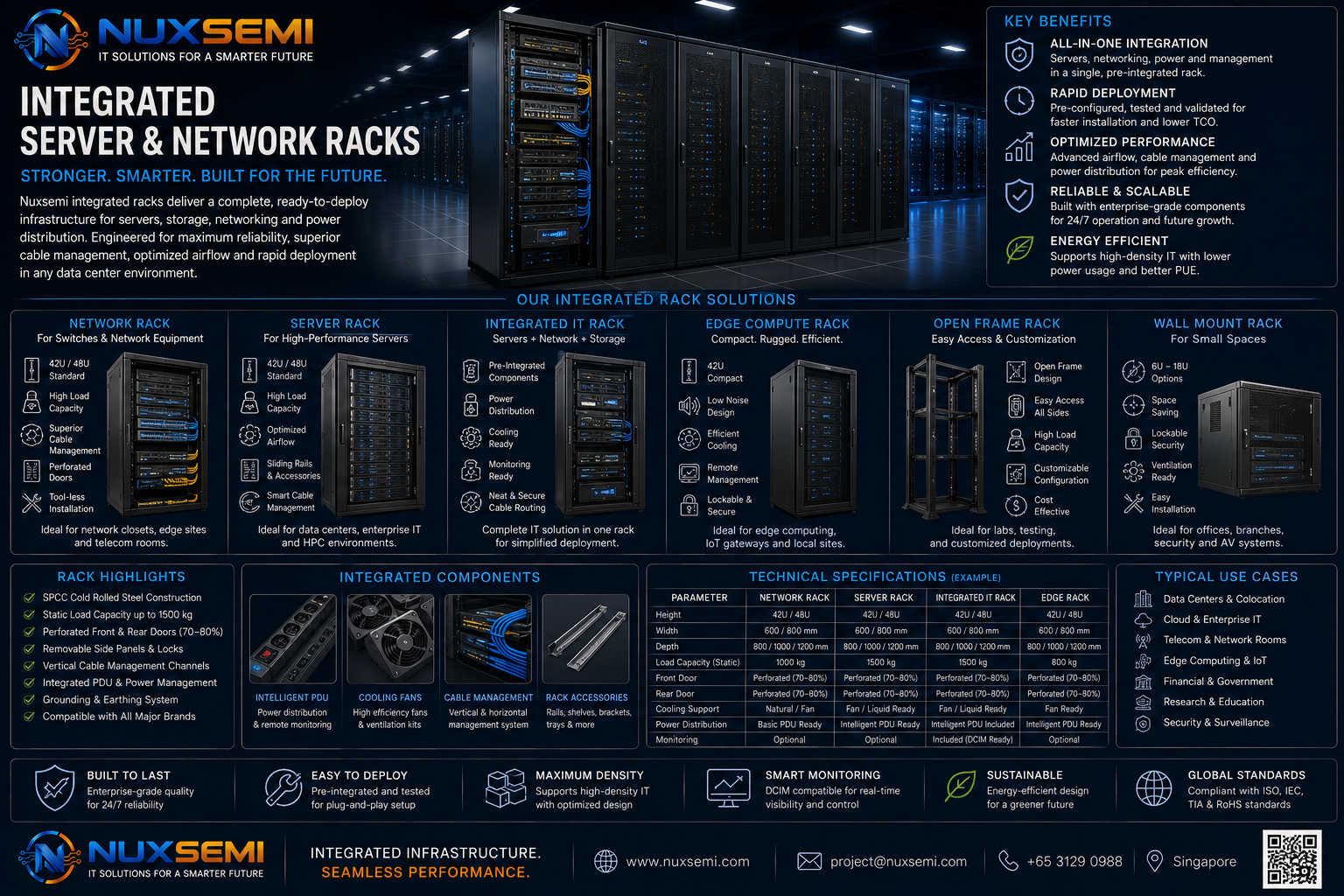
Integrated server and network racks for data center infrastructure

Reliability and ECC

Enterprise server environments prioritize availability and data integrity. ECC memory is therefore a standard consideration for infrastructure expected to operate continuously or support mission-critical workloads.

Memory selection should be verified against server-platform qualification requirements and the technical specifications defined by the system vendor or integration design.

CPU and Motherboard Compatibility

DIMM type, maximum supported capacity, supported memory speed and channel topology depend on the selected processor and motherboard. Buyers should therefore treat CPU, motherboard and memory as an integrated technical configuration.

NUXSEMI provides enterprise CPU, motherboard and memory procurement for customers requiring individual components or structured infrastructure supply.

Storage and Memory Work Together

Large-memory systems also require storage capable of feeding data efficiently to applications. High-capacity NVMe architectures can help address storage density and throughput requirements in enterprise and data-center deployments.

For this reason, memory planning often intersects with Enterprise SSD & NVMe Storage.

Deployment Strategy

A well-designed deployment balances memory capacity, memory bandwidth, processor capability, storage throughput, networking, power and cooling. Oversizing one subsystem while constraining another can increase cost without improving application performance.

For DDR5 ECC server-memory requirements or complete data-center configurations, review NUXSEMI Buy Solutions or contact our team for a formal proposal.

Payment & Settlement Options
Availability subject to transaction, jurisdiction and contractual terms.
UnionPay
Visa
Mastercard
JCB
Alipay
WeChat Pay
SEPA
SWIFT