
Building the Infrastructure Behind the Digital Future

Tag Archives: Data Center

GPU

GPU Infrastructure for AI & HPC: Performance, Power and Cooling Considerations

GPU infrastructure has become central to artificial intelligence, machine learning, scientific computing and other highly parallel workloads. However, deploying accelerators successfully requires much more than selecting the GPU itself.
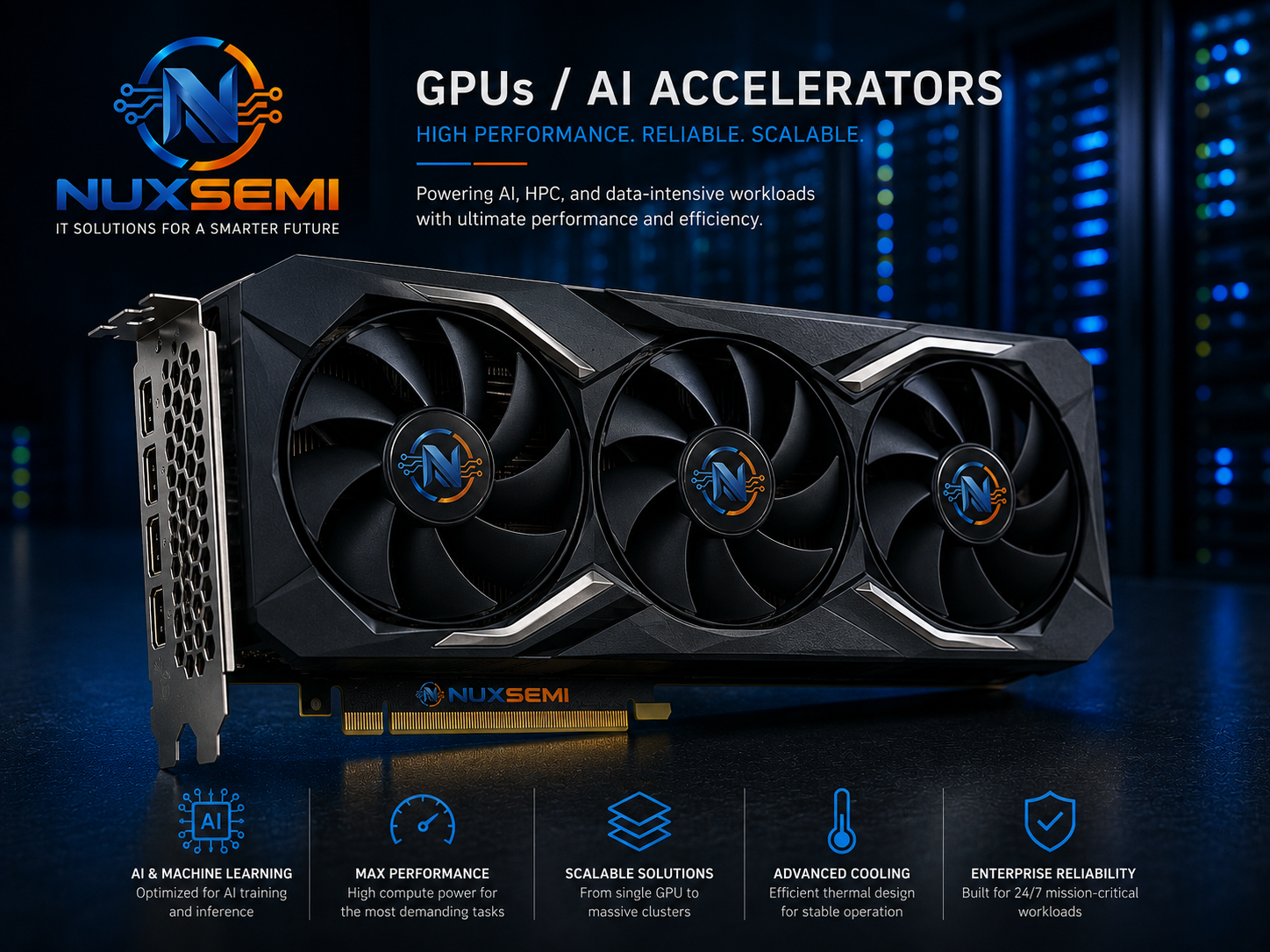
GPU and AI accelerator hardware for artificial intelligence and HPC workloads

GPU Compute Density

Modern accelerator servers can place substantial compute capacity inside a relatively small rack footprint. This creates advantages in performance density but also increases the importance of power delivery, thermal management, networking and storage architecture.

CPU-to-GPU Balance

GPU systems still rely on host processors for orchestration, data preparation and general-purpose workloads. CPU architecture, memory capacity and PCIe topology should therefore be selected to complement the accelerator configuration.

Our enterprise CPU selection guide for AI and HPC covers the processor side of this architecture.
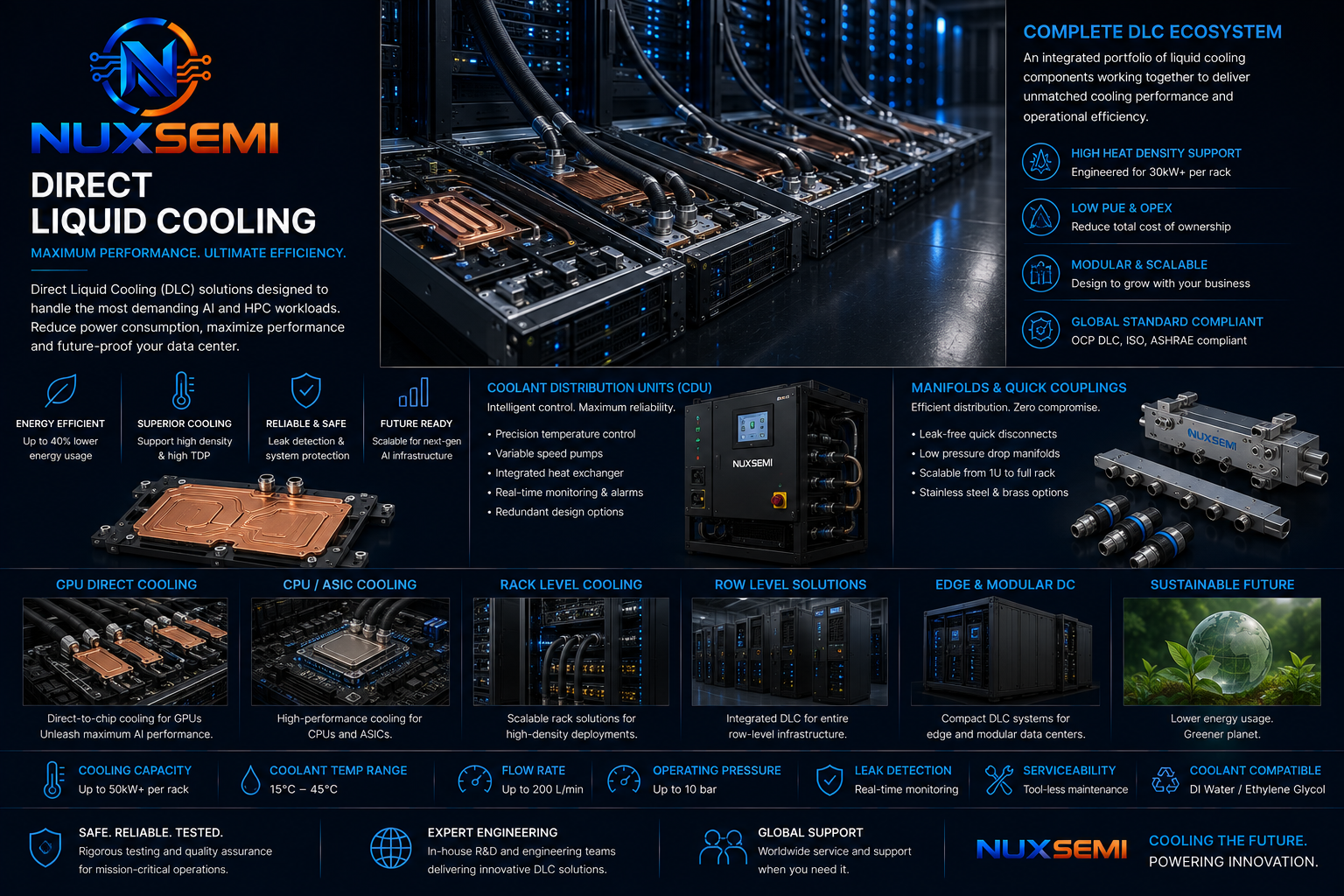
Direct liquid cooling infrastructure for AI GPU and HPC data center systems

High-Speed Networking

Multi-node AI training and HPC clusters depend heavily on low-latency, high-bandwidth interconnects. Network design may include high-speed Ethernet, InfiniBand-class infrastructure, optical transceivers and appropriately configured network adapters.

NUXSEMI provides Networking & Connectivity Solutions for enterprise, AI and HPC infrastructure.

Storage Throughput

Accelerators require data to be delivered efficiently. Storage design can become a bottleneck when large datasets must be continuously supplied to compute nodes.

High-capacity enterprise NVMe SSDs and scalable storage architectures can therefore play an important role in AI and HPC environments. See our Enterprise SSD & NVMe Storage Solutions.

Power and Thermal Density

GPU-rich racks can significantly increase facility power density. Cooling architecture must be evaluated at the rack and data-center level rather than treated as an afterthought.

For suitable high-density deployments, Direct Liquid Cooling can transfer heat more efficiently from processors and accelerators than relying exclusively on conventional air cooling.

Procurement and Deployment Models

NUXSEMI can support equipment acquisition through Buy Solutions or structured technology deployment through Lease Solutions, depending on the commercial requirements of the project.

For GPU servers, AI clusters, HPC infrastructure, networking or cooling requirements, contact NUXSEMI for a project-specific proposal.
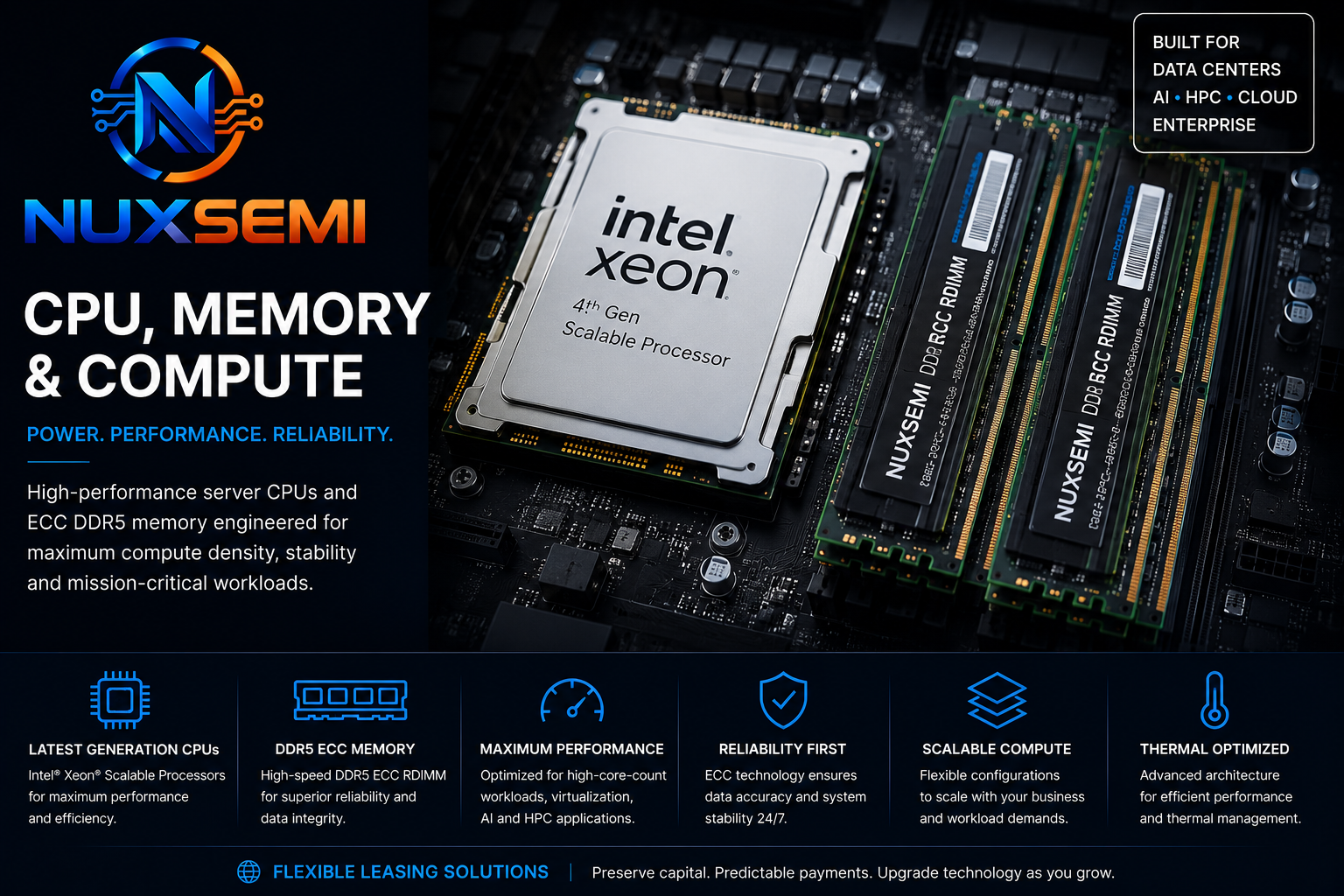
Memory architecture has become increasingly important as enterprise servers support larger virtualized environments, analytics platforms, AI pipelines and data-intensive applications. DDR5 introduces higher bandwidth and greater platform scalability, but effective deployment requires more than simply installing the maximum available capacity.

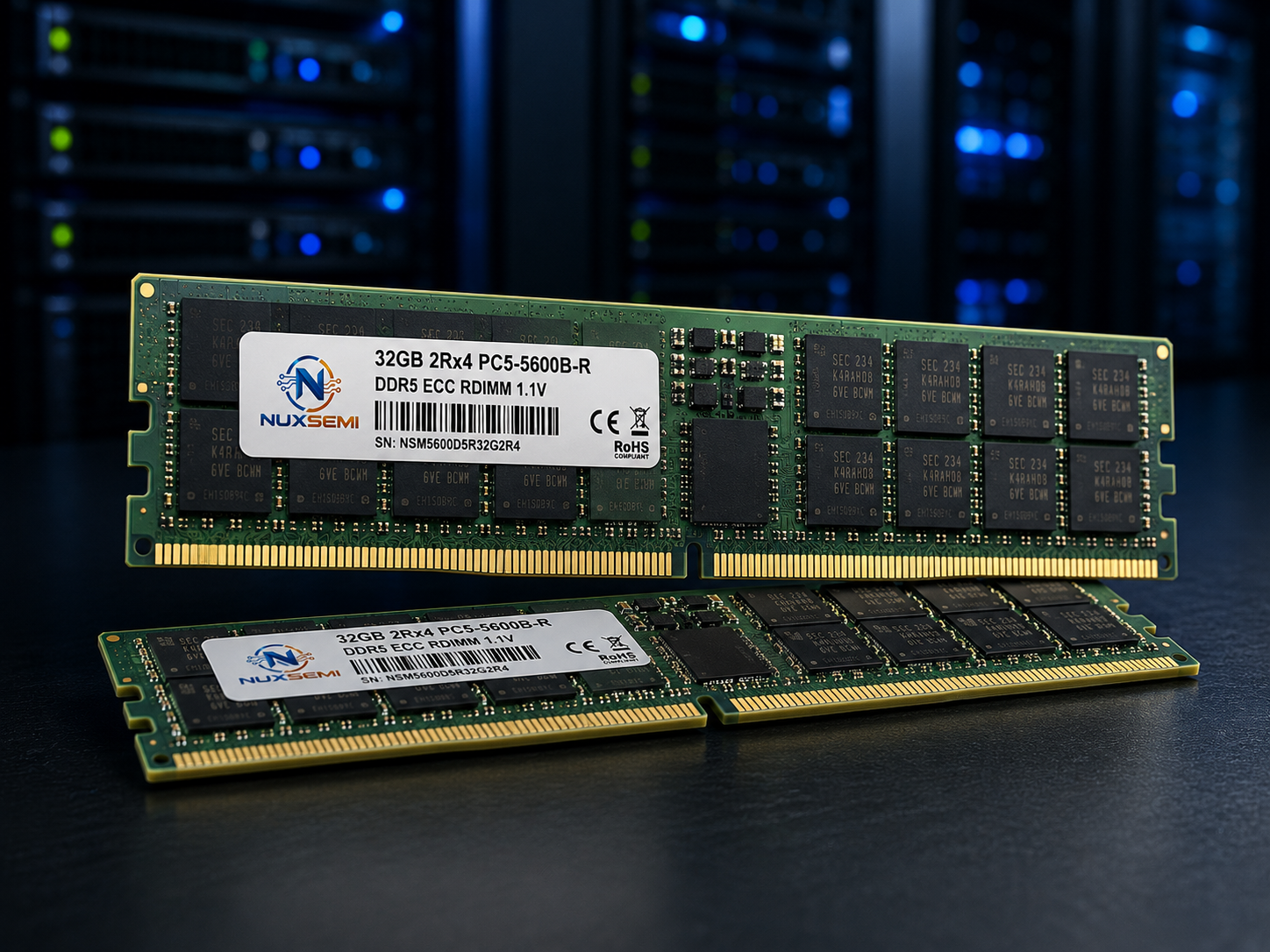
Enterprise ECC DDR5 server memory modules for data center infrastructure

Why ECC Memory Matters in Enterprise Systems

Error-correcting code memory is widely used in server infrastructure because data integrity and system stability are critical in long-running enterprise workloads. ECC functionality is designed to identify and correct certain memory errors that would otherwise create instability or data corruption risks.

Capacity Versus Bandwidth

Memory capacity and memory bandwidth address different requirements. A virtualization host may require substantial capacity to accommodate many virtual machines, while scientific, analytics and high-performance applications may depend heavily on memory bandwidth.

The optimal configuration therefore depends on the workload rather than on capacity alone.

Enterprise server CPUs ECC DDR5 memory and compute infrastructure

Memory Channel Population

Server processors typically provide multiple memory channels. Balanced channel population can be important for achieving expected platform bandwidth. An improperly balanced configuration may leave available processor memory bandwidth underutilized even when significant memory capacity has been installed.

Customers evaluating CPU, motherboard and DDR5 configurations can review our CPU, Motherboard & Memory Solutions.

Memory and CPU Selection Are Interdependent

Processor architecture determines supported memory channels, DIMM capacity, maximum memory speed and platform limits. For this reason, memory design should be performed together with processor and motherboard selection.

Our related article on enterprise CPU selection for data centers provides additional context on balancing processor performance with memory and I/O requirements.

AI, HPC and Data-Intensive Workloads

AI and HPC environments frequently place additional pressure on system memory because processors, accelerators and storage systems must exchange large datasets efficiently. Memory bottlenecks can reduce overall utilization even when substantial compute capacity is available.

For integrated infrastructure requirements, NUXSEMI's Data Center & Enterprise IT Solutions provide a broader view of the available technology stack.

Procurement Considerations

Enterprise buyers should verify memory type, capacity, rank, speed, platform compatibility and manufacturer qualification before deployment. For international supply or project-specific configurations, these parameters should be defined in the applicable quotation and technical documentation.

For enterprise DDR5 ECC memory, server upgrades or complete compute configurations, request a technical and commercial proposal from NUXSEMI.

Alex Jhonmartin | By Devlopers

Memory architecture has become increasingly important as enterprise servers support larger virtualized environments, analytics platforms, AI pipelines and data-intensive applications. DDR5 introduces higher bandwidth and greater platform scalability, but effective deployment requires more than simply installing the maximum available capacity.

Enterprise ECC DDR5 server memory modules for data center infrastructure

Why ECC Memory Matters in Enterprise Systems

Error-correcting code memory is widely used in server infrastructure because data integrity and system stability are critical in long-running enterprise workloads. ECC functionality is designed to identify and correct certain memory errors that would otherwise create instability or data corruption risks.

Capacity Versus Bandwidth

Memory capacity and memory bandwidth address different requirements. A virtualization host may require substantial capacity to accommodate many virtual machines, while scientific, analytics and high-performance applications may depend heavily on memory bandwidth.

The optimal configuration therefore depends on the workload rather than on capacity alone.

Enterprise server CPUs ECC DDR5 memory and compute infrastructure

Memory Channel Population

Server processors typically provide multiple memory channels. Balanced channel population can be important for achieving expected platform bandwidth. An improperly balanced configuration may leave available processor memory bandwidth underutilized even when significant memory capacity has been installed.

Customers evaluating CPU, motherboard and DDR5 configurations can review our CPU, Motherboard & Memory Solutions.

Memory and CPU Selection Are Interdependent

Processor architecture determines supported memory channels, DIMM capacity, maximum memory speed and platform limits. For this reason, memory design should be performed together with processor and motherboard selection.

Our related article on enterprise CPU selection for data centers provides additional context on balancing processor performance with memory and I/O requirements.

AI, HPC and Data-Intensive Workloads

AI and HPC environments frequently place additional pressure on system memory because processors, accelerators and storage systems must exchange large datasets efficiently. Memory bottlenecks can reduce overall utilization even when substantial compute capacity is available.

For integrated infrastructure requirements, NUXSEMI’s Data Center & Enterprise IT Solutions provide a broader view of the available technology stack.

Procurement Considerations

Enterprise buyers should verify memory type, capacity, rank, speed, platform compatibility and manufacturer qualification before deployment. For international supply or project-specific configurations, these parameters should be defined in the applicable quotation and technical documentation.

For enterprise DDR5 ECC memory, server upgrades or complete compute configurations, request a technical and commercial proposal from NUXSEMI.

Payment & Settlement Options
Availability subject to transaction, jurisdiction and contractual terms.
UnionPay
Visa
Mastercard
JCB
Alipay
WeChat Pay
SEPA
SWIFT